What was announced
The World Economic Forum 2026 met in Davos January 19–23 with AI as the dominant agenda item. The conversation converged on three themes: risk-proportionate governance, runtime governance for multi-agent systems, and what Microsoft CEO Satya Nadella framed as “corporate AI sovereignty” — firms owning the intelligence layer that encodes their distinctive capabilities. Anthropic CEO Dario Amodei warned the forum that frontier AI is uniquely well-suited to autocracy, calling for targeted chip-export controls. A WEF press release on the same week reported leading organizations are shifting from “potential” to “performance” — measuring AI by realized output rather than pilot count.
What it means
The vocabulary shift is the substantive event. For two years, AI policy discussion at this forum was framed as risk management — what to restrict, what to monitor, what to ban. The 2026 framing is different. It treats AI as critical infrastructure where the governance question is who owns it, not whether it should exist. “Sovereignty” applied to AI is a deliberate echo of “data sovereignty” — a recognition that the layer of intelligence inside an organization is becoming as load-bearing as its data layer was a decade ago.
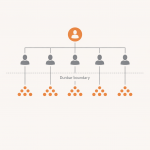
For governments, this redirects policy from rule-writing to capability-building: domestic compute, domestic foundation models, controlled exports. For corporations, it redirects strategy from procurement to capability ownership: which models do you fine-tune yourself, which workflows encode your tacit knowledge, and which partners do you let inside the trust boundary. Both translations point to the same architectural question: where does the irreducible cognitive core of your organization live, and who can take it from you.
Andreas’s view
My read on this: Davos is a leading indicator of where C-suite vocabulary moves over the next 12 months. “Corporate AI sovereignty” is not a slogan — it is a framing that makes specific decisions easier to defend in a board meeting. Building your own model fine-tunes is sovereignty. Choosing not to send your customer interactions through a third-party model API is sovereignty. Maintaining a private inference cluster is sovereignty. The vocabulary justifies budgets that previously read as duplicative or paranoid.
I don’t think the sovereignty framing is purely defensive. There is a competitive argument inside it: organizations that operate as pure consumers of frontier models are paying rent on the cognitive layer of their own business. Organizations that operate as owner-operators of a fine-tuned, workflow-embedded intelligence layer pay less rent and accumulate a moat that compounds with their data. The Davos talking points are starting to reflect that distinction.
The way I see it, the question that matters this quarter is not “what is our AI strategy” but “what would it take to lose access to our primary model provider, and what would happen to the business if we did.” If the answer is catastrophic, the sovereignty argument is operational, not philosophical, and it has a budget implication.
Three things I’m watching
- I’ll be watching whether companies run model-dependency stress tests — simulating the operational impact of losing their primary frontier-model provider for 30, 90, and 180 days. The result is the size of their sovereignty problem, and whether they even know that number tells me a lot.
- The companies that preserve strategic optionality will be the ones that draw a clear line between work requiring owned cognition (fine-tuned, embedded, internal) and work that can run on rented cognition (API-served frontier models) — and treat that boundary as a capital decision, not a procurement decision.
- I’ll be watching how the policy direction develops across major operating jurisdictions. Sovereignty framing in Davos has a consistent track record of translating into sovereignty requirements in regulated industries within 12–24 months.
References and related signals
- WEF: From Potential to Performance — how leading organizations are making AI work
- Rest of World: Davos 2026 — key takeaways on AI, jobs, robots and global tech
- Credo AI: Five takeaways from Davos 2026
- Global Advisors: the AI signal from WEF 2026
- Related signal: the Davos sovereignty conversation runs in parallel with national initiatives — French/EU sovereign-AI capacity build, US chip-export tightening, sovereign fund participation in frontier-lab funding rounds.