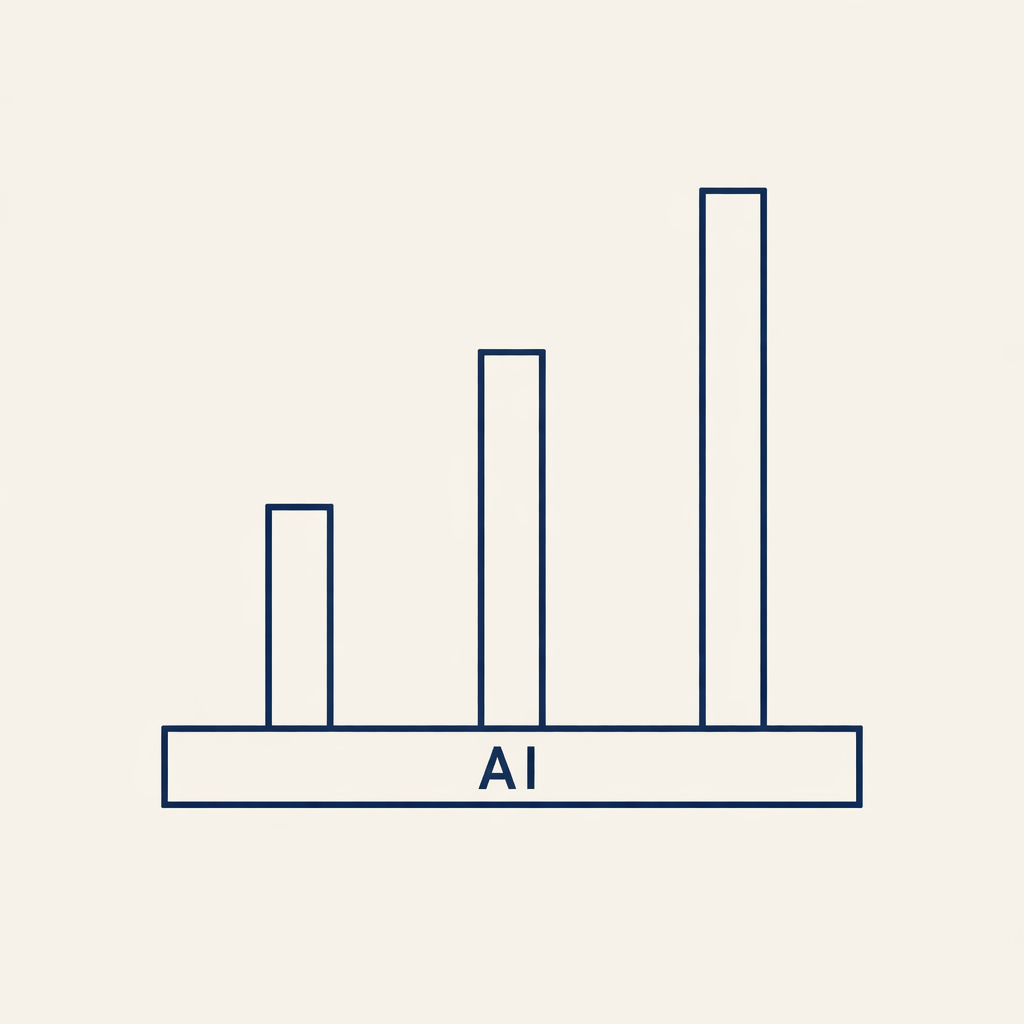
Gartner’s April read says eighty percent of enterprises will have adopted at least one vertical AI agent by year-end, and thirty percent of all enterprise AI deployments will be vertical-specific. Bessemer’s vertical AI report from this month is even more direct: vertical AI companies founded after 2019 are reaching eighty percent of traditional SaaS contract values while growing four hundred percent year-over-year. This is not a minor adjustment to the deployment landscape. It is a structural redirection of where the value of agentic AI accrues.
For boards in 2026, the implication is that the right framework for thinking about AI vendor strategy is no longer horizontal-versus-vertical. It is which verticals you bet on, and how early. Deployment speed defines advantage in this cycle, and the deployment race is now a vertical-by-vertical race.
The shift: vertical specialization beats horizontal generality at the workflow layer
Horizontal AI tools — the chat assistants, the general-purpose copilots, the broad productivity overlays — are still the largest category by usage. They are not the largest category by enterprise value. The reason is structural. A horizontal copilot is good at fifty things. A vertical agent is excellent at five things that are deeply embedded in a specific workflow.
When the enterprise needs to extract value, depth wins over breadth. Abridge in clinical documentation. Harvey and EvenUp in legal. Hebbia in financial research. Specialized clinical-coding agents at major payers. The vertical players ship integrations into existing systems, understand the regulatory and accuracy constraints of the domain, and deliver outcomes that horizontal tools cannot match without significant configuration effort that customers refuse to undertake.
The defensibility of vertical players is also higher than the market priced in 2024. The data flywheel inside a regulated vertical is genuinely hard to replicate. The customer relationships are stickier because switching costs include re-credentialing within the regulator’s expectations, not just re-implementing software.

The role change is the chief AI buyer becomes a portfolio manager
Inside enterprises, the executive responsible for AI vendor strategy is increasingly running a portfolio of vertical specialists alongside the foundation-model contracts. The horizontal tools form a substrate. The vertical agents form the high-value layer. The portfolio manager has to balance ROI realization against integration overhead, and has to decide which verticals to deepen versus which to defer.
The skill set for this role is closer to portfolio investment management than to traditional procurement or IT leadership. The portfolio manager has to read product roadmaps, anticipate vendor consolidation, manage concentration risk, and time entry into emerging verticals where category leaders have not yet emerged. None of this is in the standard procurement or CIO playbook.
Most large enterprises have not formally structured this role yet. The work is happening inside the CIO function or inside individual line-of-business AI initiatives, with no portfolio-level coordination. The result is double-procurement of overlapping vertical capability and missed early-mover advantage in verticals where the category leader will not stay reasonably priced for long.
The strategic consequence reshapes acquisition strategy
For enterprises in regulated industries — banks, insurers, hospital systems, large law firms, accounting firms — the vertical-AI thesis has a direct M&A implication. The category leaders in each vertical are trading at premium multiples now and will trade at higher multiples by 2027 once their data flywheels and customer concentrations are visible in audited financials. The window for acquisition at reasonable multiples is open in 2026 for most verticals. It will close.
For incumbents who do not acquire, the implication is partnership at scale. The vertical specialists need distribution that incumbents already have. The incumbents need capability that the specialists already have. The deal terms will tilt toward the specialists as their growth rates remain visible. Incumbents that delay partnership decisions to 2027 will pay more for less favorable terms.
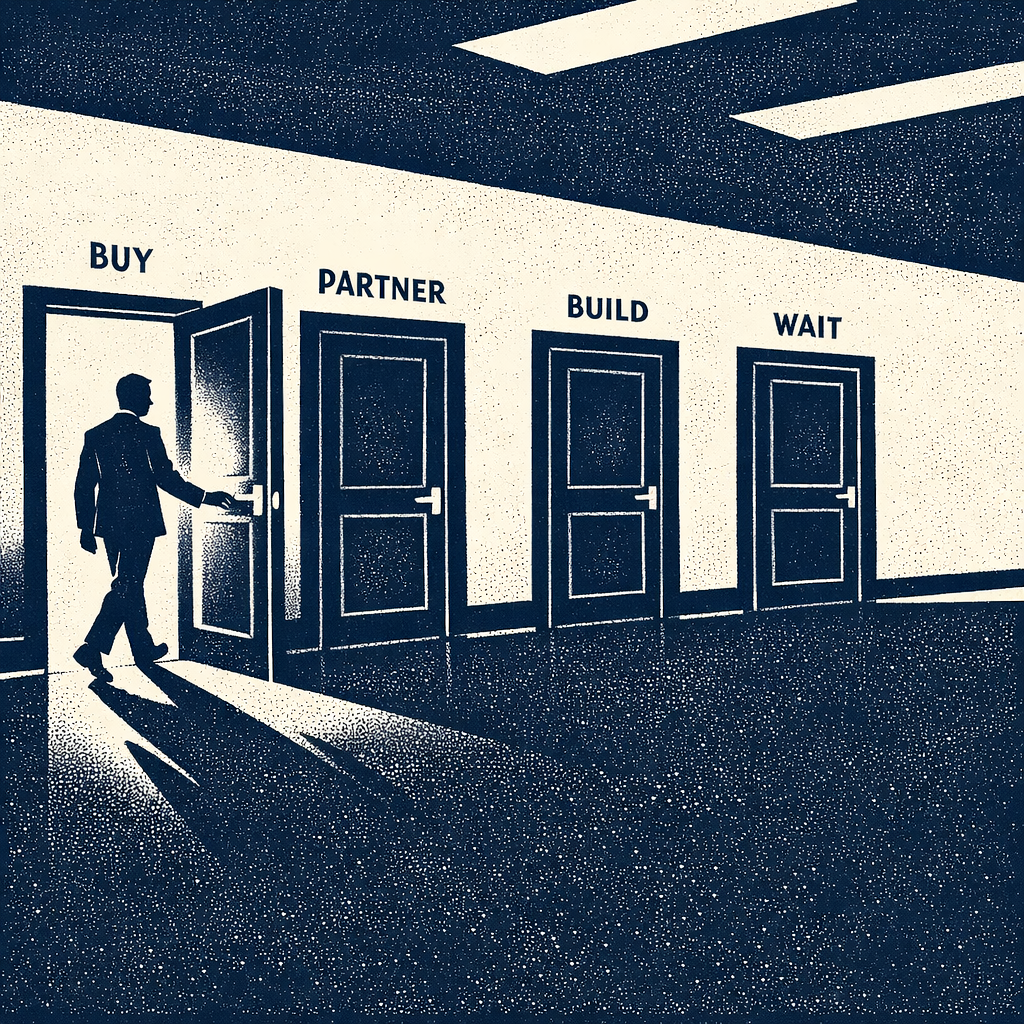
For boards governing AI strategy, the directive question is whether the company is buying or building or partnering for vertical AI capability — and whether that decision is being made deliberately for each vertical, or by default by the absence of a decision. Default-by-absence is the mode most large enterprises are operating in. It is the most expensive mode.
So what boards should do this quarter
Map the AI vendor portfolio with horizontal versus vertical breakdown. If the breakdown is more than two-thirds horizontal, the company is missing the value-creating layer. If it is unmapped, that is a more urgent finding.
Designate an executive owner for vertical AI portfolio strategy with explicit authority across line-of-business silos. The decisions are too consequential to be made silo by silo. The horizontal-tool decisions can stay with the CIO. The vertical-agent decisions need a portfolio view.
For each major vertical relevant to the business, assign a clear posture: acquire, partner, build, or wait. Defaulting to wait by not deciding is the same as deciding to wait — and in most verticals it is the wrong decision in 2026. Execution speed will separate leaders from followers in this cycle.