The year opens with a measurable gap. McKinsey’s 2026 trust maturity survey, fielded in December and January, puts twenty-three percent of organizations into the scaling phase for agentic systems and thirty-nine percent into experimentation. The remaining majority — nearly two thirds — has not yet begun scaling AI across the enterprise. The capability frontier moved twelve to eighteen months faster than the operating models around it. That gap is no longer an experimentation question. It is the year’s defining strategic risk.
The boards that close this gap first will not be using better models than their competitors. They will be running organizations that can metabolize what the models already do. The constraint is no longer technology. It is adoption — and adoption is a leadership problem.
The shift is structural, not cyclical
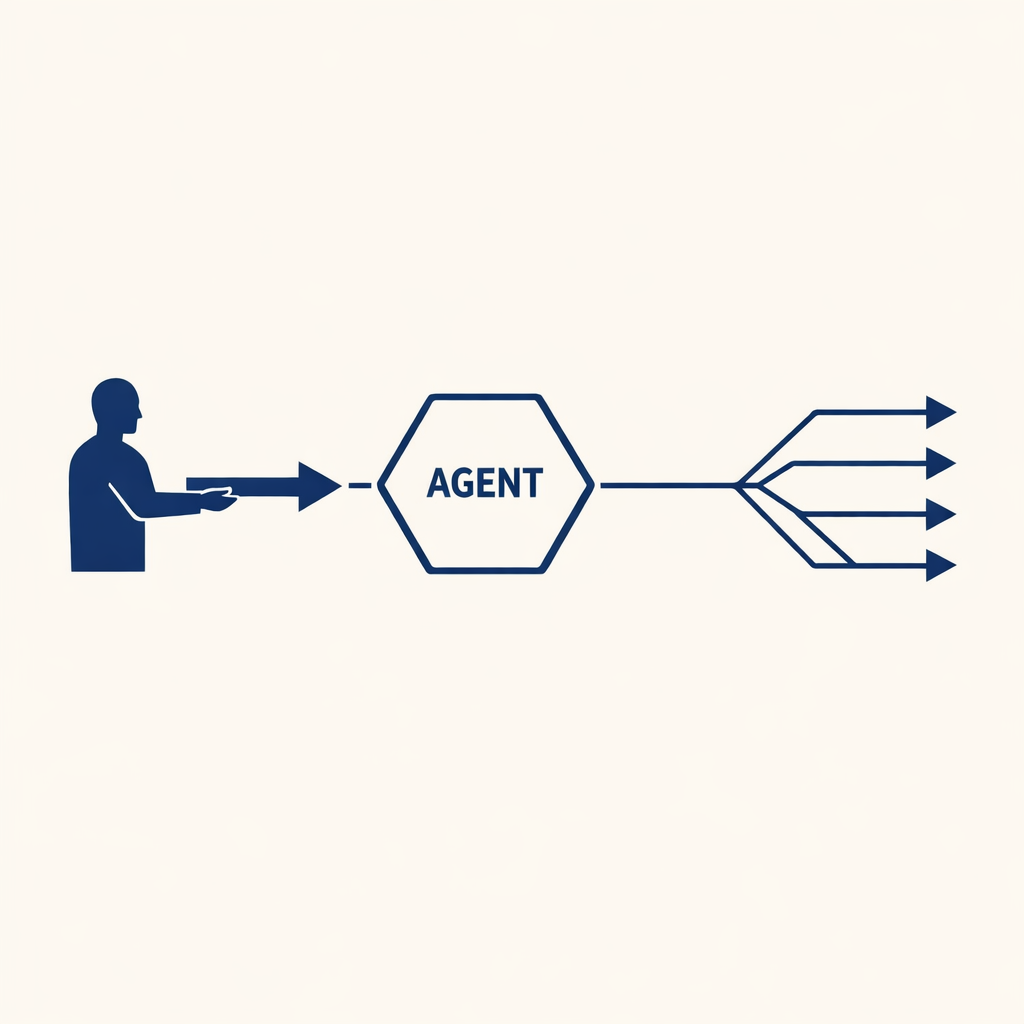
Agentic systems are not a new feature inside a familiar product. They are a new class of worker. They take a goal, decompose it into steps, hold state across those steps, call other tools, recover from errors, and return a completed unit of work. That changes what a job is, not how a job is done.
The 2025 narrative — copilots, productivity boosts, ten percent uplift — is over. The 2026 question is harder. What units of work no longer require a human originator? What units of work now require a human reviewer instead of a human executor? Which decisions can be delegated to a system that explains its reasoning? The companies asking these questions on a Monday morning are reorganizing. The companies still benchmarking model accuracy are stalling.
The shift is one-way. No board will vote in 2027 to remove agentic systems from a workflow they reduced from forty hours to four. The architectural choices made this year will compound.
The role change has already happened on the ground
Inside organizations that have actually shipped agentic systems, the role redefinition is happening informally, by individual contributors, ahead of any HR process. A senior analyst who used to write three reports a week now reviews twelve agent-drafted reports a week and signs off on the analysis. A staff engineer who used to write three pull requests a day now reviews fifteen agent-generated pull requests a day. An account manager who used to draft proposals now edits proposals the agent has built from CRM context.
The work that survives is judgment, taste, accountability, and relationship. The work that does not survive is execution under specification. Job titles still describe the second category. Job content has already shifted to the first.
First-line managers feel this most acutely. They were trained to manage humans doing execution work. They are now managing humans doing review work, who in turn are managing systems doing execution work. That is a different management discipline — closer to portfolio management of automated processes than to people management of execution teams.

The organizational consequence is delayering
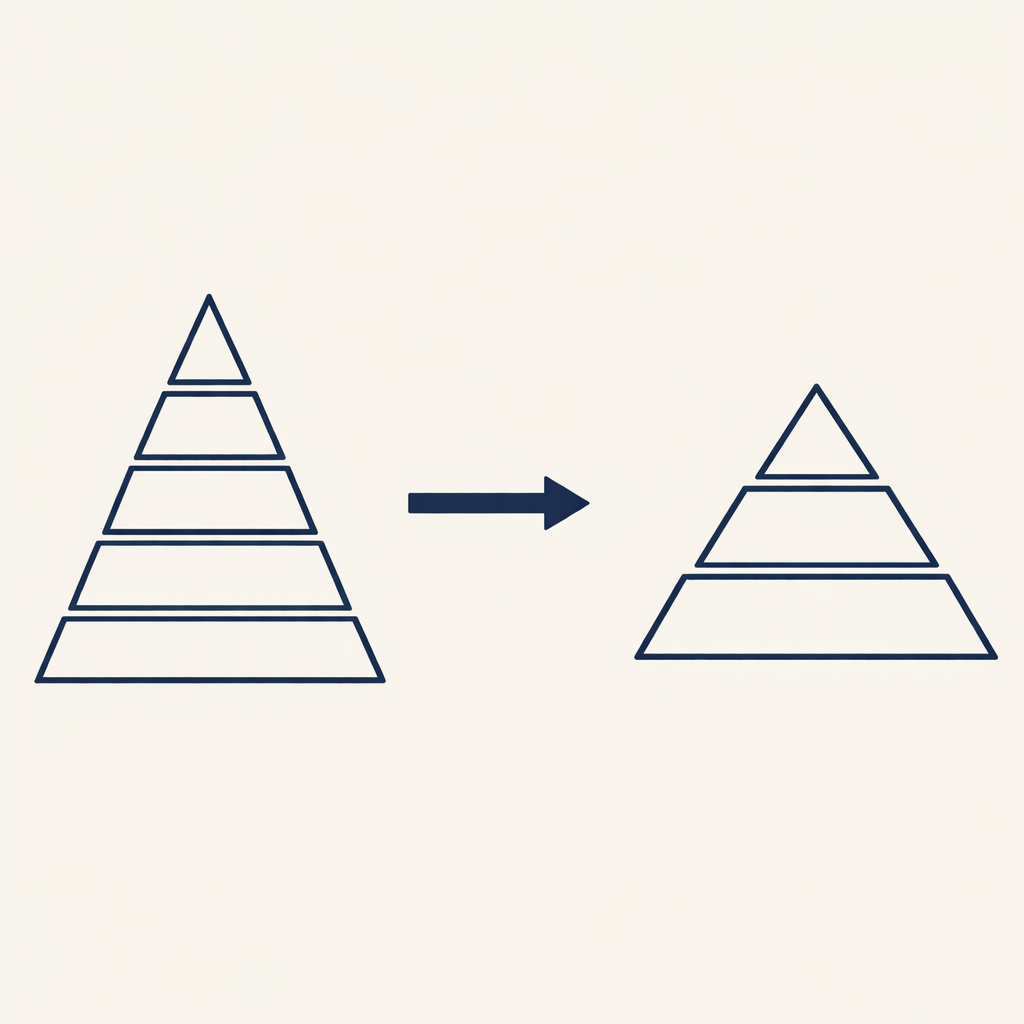
Span of control widens when the work below each manager becomes more automated and more reviewable. McKinsey’s parallel work on the state of organizations points in the same direction: companies that scale agentic systems also flatten by removing one to two layers of middle management. The economic logic is direct. Middle layers existed to translate strategy into execution and to coordinate the humans doing that execution. When the execution is increasingly handled by systems and the translation is increasingly handled by models, the layer is doing less.
This is not the 2024 layoff cycle that hit individual contributors. This is a 2026 reorganization that compresses the manager-of-managers layer. It is structurally different and politically harder. The people most threatened by it are the people running the budget meetings about it.
Organizations that resist the delayering will have a temporary cost advantage and a permanent decision-velocity disadvantage. Decision cycles compress when fewer humans need to be in the loop. The competitor who removed two layers will commit to a market move three weeks faster. Over a year, that compounds into a different market position.
So what boards should do this quarter
Two actions belong on the Q1 agenda. First, demand a workforce plan that names the units of work moving from human execution to human review, with a twelve-month horizon. Vague AI strategies are no longer acceptable as deliverables; the question is which jobs, which tasks, which review cadences, which accountability lines.
Second, name an executive owner for the operating-model redesign — not for AI strategy as a separate track, but for the way the company will be organized around the systems it has already deployed. The CHRO and the COO are the natural owners. The CTO is not. The technology decision is downstream of the operating-model decision, and treating it as upstream is how organizations end up with sophisticated tools and a 2023 org chart.
The year that just started will be measured by the gap between capability and operating model. The companies that close it first set the pace for the rest of the decade. The risk is not moving too fast. The risk is moving too late. Execution speed will separate leaders from followers.

Leave a Reply
You must be logged in to post a comment.